

As the weather warms, photographer Ray Roberts is delighted to spot reptiles soaking up the sun’s rays on one of his Nature Watch walks....
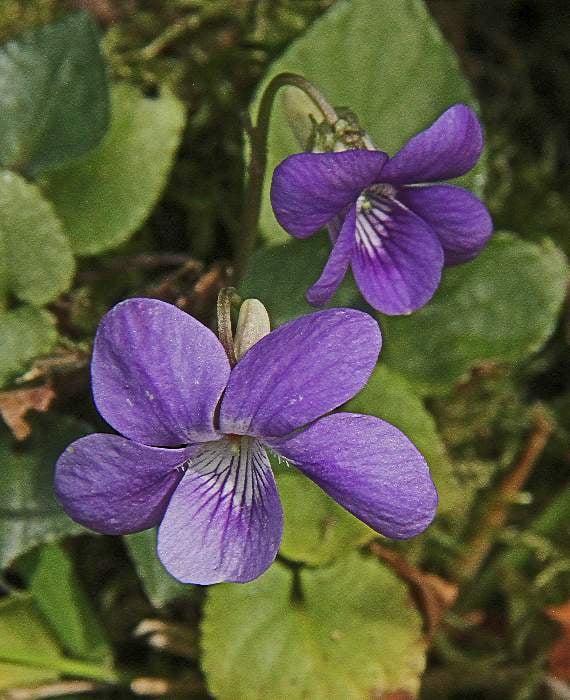
My walk on Mothering Sunday was in bright sunshine and just over the road I found a couple of dog violets – Viola riviniana – about half way up the hedgerow and in plain sight. To us country folks there are two kinds of violets, the scented sweet violet – Viola odorata – and the common dog violet that is not scented. Dog, is a name given to number of wild flowers to distinguish them from relatives that are superior in some way, usually because of their perfume.
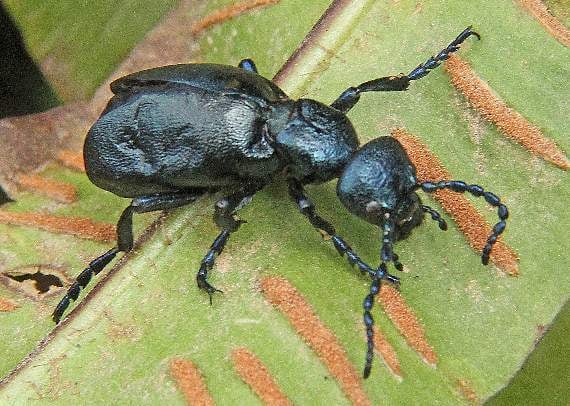
Then I spotted a black beetle that was taking in the sun as it climbed across a leaf of a hart’s tongue fern. This insect is also known as a bloody-nosed beetle as it emits a red fluid from its mouth, that looks a bit like blood, when alarmed or interfered with. Even though the adults have wings, they are flightless and very slow when crawling.
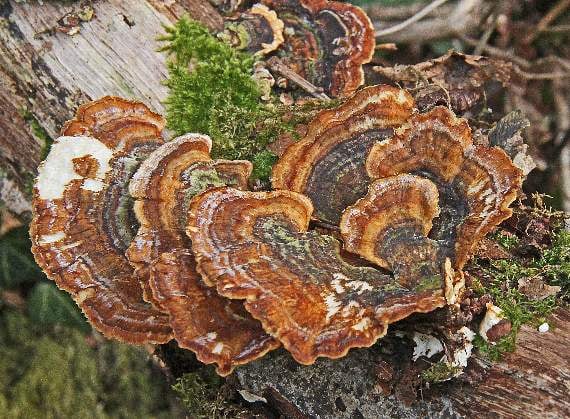
As usual I always look out for different fungi and on a short length of dead ash that had been thrown on top of the hedge, were growing some many-zoned polypore bracket fungi. This fungus can be seen throughout the year and although it’s not a flower it can look very pretty.


Some white flowered lungwort – Pulmonaria sissinghurst – where growing on the top of a hedge. This is generally a garden plant but obviously some have escaped into the countryside. They have spotted leaves just like the pink/blue flowered common lungwort that also grows near the village and it was great to find another white flower in the wild.
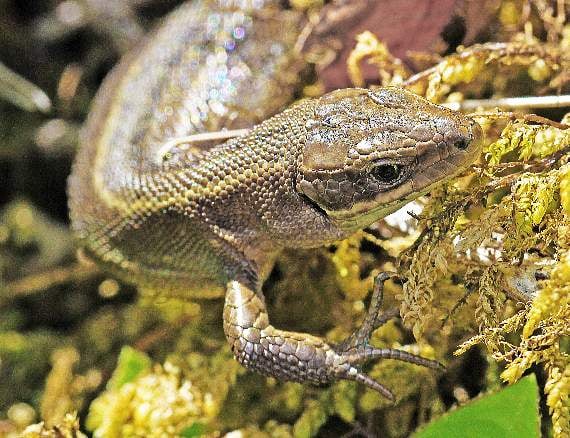
A lizard was warming its body in the sun, but after hearing my camera clicking it quickly disappeared. More than 100 million years ago these small reptiles ruled the Earth and the name ‘dinosaur’ comes from two Greek words; ‘terrible lizard’. They feed on insects, especially spiders and grasshoppers and their young are born in a transparent membrane which they soon break out of. Litters range in number from five to ten and are born during mid-summer.
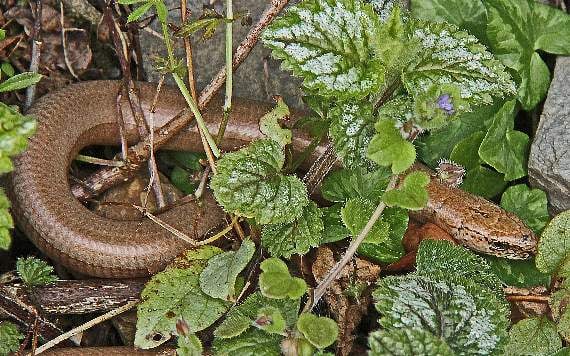
I thought the day could not get any better but, when I was nearly home, I spotted another lizard, a legless one this time. A slow worm was taking in the sun but was a little shy, as its body was almost hidden by vegetation. Slow worms live on earthworms, slugs and snails and, as with the lizard, they have live young that are born in late summer. They also have a unique way of dealing with a life threatening situation when being grabbed by the tail by an animal or large bird, the tail will break off thus allowing the slow worm to escape.