

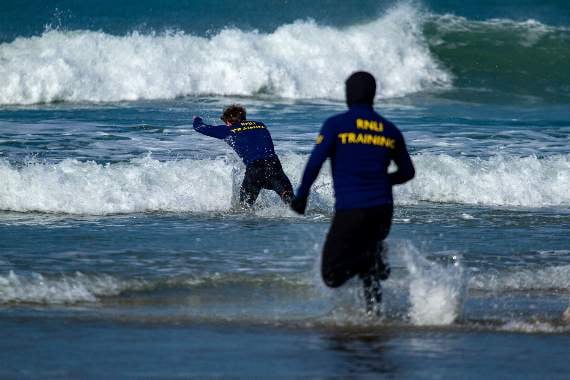
LIFEGUARD patrols in Whitsand Bay will include Tregonhawke Beach for the first time this year.
RNLI lifeguards are making a welcome return to the beaches and will be on duty daily over the two-week Easter school holidays.
The charity has been working with partners, behind the scenes, through the challenges of lockdown, to recruit, train and prepare their lifeguards for what is expected to be another busy summer on UK beaches and will deliver their usual lifeguard service across the UK and Channel Islands this year in its standard phased approach.
The first set of beaches in the south west will go on service at the start of the Easter holidays, and for this first time this year this will include Tregonhawke. The number of beaches will increase through the season until the peak school summer holidays when over 89 beaches across the region will be patrolled.



James Millidge, RNLI Area Lifesaving Manager said: “We’re really pleased to be able to provide a lifeguarding presence in south east Cornwall this Easter.
“While lockdown restrictions will remain in place, we will be expecting people to make the most of their time off during the school holidays to want to visit the coast. Whitsand Bay is very popular and having lifeguard patrols on Tregonhawke allows those living close by to access this service without having to travel too far.
“While you’re at Tregonhawke you’ll be able to see our brand new lifeguard building which is under construction. We’re so excited to be able to operate from a new purpose-built facility, this is a significant investment for the bay and will have a positive impact for generations to come.”
Beaches with lifeguard patrols this holiday include Sennen, Porthmeor, Gwithian, Hayle, Praa Sands, Porthtowan, Perranporth, Fistral, Towan, Watergate, Mawgan Porth, Constantine, Harlyn, Polzeath, Widemouth, Summerleaze, and Tregonhawke in Cornwall, and in Devon – Croyde, Woolacombe, Bantham, and Exmouth.The RNLI are encouraging the public to follow government advice on social distancing, travel and contact with others when visiting the beach to keep themselves and our lifeguards safe.
RNLI lifeguards are at the forefront of the charity’s lifesaving work, offering preventative safety advice to visitors and rescuing those in difficulty in the water. Not only do they receive the best training but the best equipment too, so they are able to deal with any emergency situation as professional first responders.
In 2020, RNLI lifeguards covering the south west saved 56 lives, aided 9,179 people and responded to 6,287 incidents which included water rescues, minor first aid and helping to reunite missing children with their families.
Each year the RNLI works in partnership with local authorities and landowners to set up and roll out the lifeguard service, which is complex in normal times even without the challenges of doing so during a pandemic.
James added “We have been here before, and with the added benefit of being able to plan ahead, we have developed contingencies should things change.
“The protocols and measures introduced last year because of coronavirus will continue. We are working with local authorities and landowners, who ask us to provide a lifeguard service on their beaches, to make sure the environment for lifeguards to return to is safe. We will continue to monitor the risk to our people and the public in relation to the pandemic.”
The RNLI is urging anyone choosing to visit the coast to make sure they keep themselves and their families safe by following beach safety advice;
• Visit a lifeguarded beach and swim between the red and yellow flags – find your nearest at rnli.org.uk/lifeguardedbeaches
• Check the weather forecast, tide times and read local hazard signage to understand local risks
• If you fall into the water unexpectedly, FLOAT TO LIVE. Fight your instinct to thrash around, lean back, extend your arms and legs, and Float.
• In an emergency dial 999 and ask for the Coastguard.
•
If you are a local business near the coast you can help the RNLI share key water safety messages and save lives by becoming a local amabassdaor. As a local ambassador you can help be the eyes and ears in your community by helping the RNLI share important water safety messages with more people. To find out more visit: https://rnli.org/support-us/volunteer/volunteering-opportunities/rnli-local-ambassador