
These plans can comprise of a number of different reasonings – ranging from permission to replace windows or listed building consent ranging up to large house building developments or changing of use of a building, for instance, from an office to a café, or flats.
Within this large and often complex system, there are a number of formats from which planning advice and approval can be sought.
These range from full applications where all the details which comprise a proposed development or work to a building are submitted, to outline applications, where further details are yet to be confirmed, for example, an outline application with reserved matters for appearance may not confirm the final proposed development but rather seek permission in principle.




An example of this is one for an outline permission for 20 dwellings on land with reserved matters for appearance and scale; the reserved matters would require further permission later for their inclusion.
Other types of applications include pre-application advice requests, where would-be developers submit often outline proposals to a local authority to ascertain whether it is likely to gain support or not prior to submitting a planning application.
The vast majority of applications are decided by planning officers employed by a local authority under ‘delegated powers’, meaning they do so on behalf of their employer, however, some applications are ‘called in’ by local councillors to be discussed at an area’s strategic planning committee meeting, meaning the final decision rests with a committee of councillors.
Stalled scheme could become housing association development
PROPOSALS to revive a scheme that stalled mid way through construction due to financial costs could be revived in partnership with one of Cornwall’s housing associations.
A total of 28 houses could be built on land to the east of Cargwyn in Penwithick.
The previous developer of the scheme was unable to complete the project after building the initial seven houses due to escalating material costs, higher infrastructure requirements of the second phase, in particular the cost of constructing the road and the requirements of a ‘complex drainage strategy’.
However, it could be completed after a planning application was submitted by Sureflow Building Services in partnership with Coastline Housing, a housing association.
They have submitted plans to construct the 28 dwellings, which would include two one-bedroom maisonettes, 12 two-bedroom houses and 14 three-bedroom houses.
Each unit would have two parking spaces with the exception of the one bed properties which would have one space each. All parking spaces would feature an Electric Vehicle (EV) charging point.
The planning agent told the council: “The site has a complex history, with a previous developer unable to deliver a viable scheme. Following the construction of the first seven dwellings, the project stalled due to escalating material costs and the higher infrastructure requirements of the second phase — specifically road construction and a complex drainage strategy. Sureflow Building Services Ltd, in partnership with Coastline Housing, has now taken on the site and identified a financially viable solution to bring the development forward.
“The site comprises two adjoining fields, totalling 9,649 sqm, located on the south-western edge of Penwithick village. The land consists of a mix of hardstanding and vegetation. Development has commenced in the western field under historic planning consents, while the eastern field remains undeveloped.
“Topographically, the site slopes from west to east. Its frontage is limited, as it lies behind existing developments including the Cargwyn estate to the west, and Penwithick Park and Rosina Way to the north and east. Surrounding land use is predominantly residential. Current site access is via the Cargwyn estate. Landscaping within the western field is minimal and consists mainly of Cornish hedges and scattered trees along the boundaries.
“The original development was limited to the completion of only seven of the approved 22 units, with further progress hindered by viability concerns. Discussions with potential developers highlighted the need to revise the scheme in order to secure its deliverability. A 100 per cent affordable housing scheme was identified as a viable option, benefiting from access to alternative funding streams. Coastline Housing in collaboration with Sureflow Building Services Ltd, has assumed responsibility for the site and developed a revised scheme, which forms the basis of this submission. The configuration of the site naturally informs the layout.”
The developers said that the newly revised proposals would comprise of 28 affordable rent dwellings, providing a mix of houses and maisonettes.
The plans can be viewed using reference PA26/00146.
Plans unveiled for houses
PLANS for the construction of nine houses on land in St Austell has been filed with Cornwall Council.
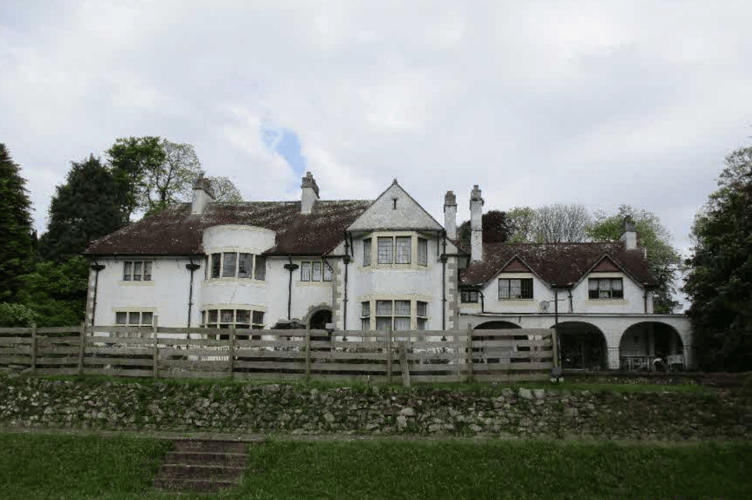
Mrs C Hutton has applied to the local planning authority for permission in principle to construct nine dwellings on land at Calartha House, St Austell.
Her planning agent told Cornwall Council: “Calartha House is a large, detached property probably built between 1910 and 1930 - It does not appear on the 1908 ordnance survey but is present on the 1932 edition. The property is set well back from Truro Road in extensive mature grounds. The property is not listed, nor are there any designations on the site.
“The size of the site allows for the delivery of between six and nine dwellings, each with well-proportioned private garden amenity space. This level of development reflects the prevailing residential density within the surrounding area. As the site lies on the edge of the urban area, a lower density is appropriate and responds to on-site constraints, including privacy distances, tree protection areas, and the retention of mature landscaping. This approach ensures that the proposed development respects and reinforces the established character of the locality. The site benefits from mains drainage and utilities.
“The current proposal would respond to the housing crisis by increasing the supply of housing by contributing up to nine additional energy efficient dwellings toward the housing targets of the Cornwall Local Plan, which have recently increased significantly from 2625 to 4421 dwellings a year.”
The plans can be viewed using reference PA26/00721.
Plan for 40 houses in Calstock
An ‘ultimate planning performance agreement’ pre-application has been submitted for the provision of a 100 per cent affordable housing scheme for up to 40 dwellings comprising a mix of social rent and shared ownership homes on around two hectares of land to the north of Piran Close, St Ann’s Chapel, near Calstock.
It would be developed, owned and managed by a local housing association.
A statement of behalf of applicant Capstone Alliance says: “We are at feasibility stage and wish to explore whether the principle of this development can be supported and understand any site constraints or issues that will need to be addressed.
“Following the conclusion of the PPA, it is our intention to make an immediate start on the layout, with the aim of submitting a detailed planning application in summer 2026.”
For more details see planning pre-application PA25/01319/PREAPP
- Keep up to date with the latest planning applications and other statutory notices (such as alcohol licensing and probates) that affect where you live by visiting our online Public Notice Portal – be the first to know by visiting www.publicnoticeportal.uk/cornish-times-series
Comments
This article has no comments yet. Be the first to leave a comment.