
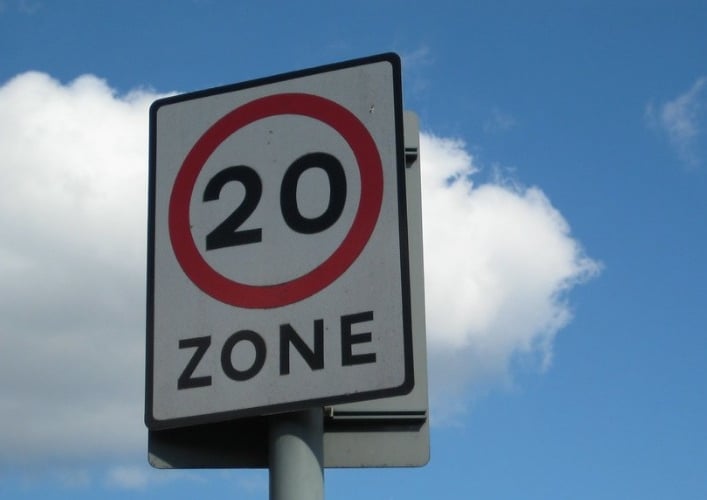
NEW lower speed restrictions have been given the green light in St Columb Major to help make the local streets safer, healthier, and greener.
Cornwall Council has introduced a 20mph speed limit across residential roads and built-up areas in the town, which includes access from Newquay Road and to The Retreat Hospital.
Other streets include Bank Street; Barn Lane; Beech Drive; Bospolvans Road; Bosworgey Close; Bridge; Bridge Hill; Broad Street; Browning Close; Carloggas Grove; Carloggas Way; Dinas Road; Fair Street; Fore Street; Glebe Close; Gordon Place; Halveor Close; Halveor Lane and Hawkens Way.
Additionally, Hawthorn Close; High Cross; Higher East Street; Highfield Avenue; Hill Crest Close; Jenner Gardens; Jenner Parc; Jubilee Close; Lower East Street; Maple Close; Market Place; Meadow Rise; New Road; Newquay Road; North Street; Penkernick Way; Polita Way; Polventon Close; Praze-An-Cronor; Queens Drive and Rachels Way.
Finally, the road from Bridge Hill to Penvale; Road from junction north of Higher Gluvian Farm to Penvale; Road from junction north-west of Trewan Bungalow to Bridge Hill; South Park; Station Road; Sycamore Close; The Hurlings; Trekenning Road; Trelawney Parc; Treventon Rise; Union Hill; Union Square; Victoria Street; West Park; West Street and Wreford Close.
Cornwall Council has brought in a 30mph limit covering the access to Barn Barton; Hurling Way; New Road; Newquay Road; St Columb Major Industrial Estate and Station Road.
The Duchyis one of the first rural areas to reduce speed limits from 30mph to 20mph on residential roads and in built-up areas. A phased countywide roll out programme has been approved after a successful pilot in Camelford, Falmouth and Penryn during 2022.
A council spokesperson said: “Cornwall Council aims to reduce both death and serious injury by 50 per cent on our roads by 2030, and 20mph limits will support this.
“There is strong evidence that driving at 20mph makes roads safer. In Bristol, lowering speed limits to 20mph led to 63 per cent fewer deaths. In Edinburgh, a city-wide 20mph limit reduced injuries by 39 per cent in one year. A study in 2024 found that 20mph speed limits in 40 European cities reduced fatalities by 37 per cent, and injuries by 38 per cent.
“Research shows that there is a clear relationship between traffic speed and the severity of injury in the event of a collision. If a pedestrian is hit by a car travelling at 19mph, on average, there is around a five per cent risk of a fatality. This risk increases over five times at 30mph.


“Lower speeds save lives, and this is why we are reducing speed limits in residential and built-up areas, to 20mph.
“Travelling at 20mph provides many other benefits too including increasing child and adult activity levels. This will improve health and wellbeing.
“Providing a safer environment. This will encourage more people to walk and cycle. Supporting climate change declaration. This will include lower emissions and tackling congestion, as well as supporting our ambition to be Carbon Neutral by 2030.
“It will help to create a stronger sense of community as more people come together to use the space.”
Comments
We've recently changed our login process. If you have an account for commenting, you will need to re-register on the login window.
This article has no comments yet. Be the first to leave a comment.