
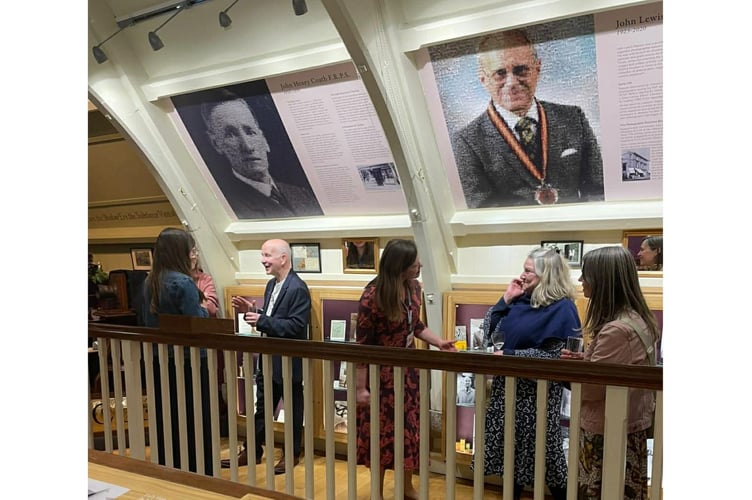
A NEWLY refurbished gallery celebrating one of Liskeard’s most cherished figures has reopened to the public, bringing history, photography and powerful human stories back into focus.
Liskeard & District Museum on Pike Street officially reopened the John Rapson Gallery on March 20 following a major refurbishment that began in September 2025. The revitalised space honours the late John Rapson – a respected local photographer, Cornish bard and long-time supporter of the museum – with a new exhibition titled ‘In Reflection: Photographs, Peacemakers, and Pacifist Emily’.
The project has transformed the gallery into a modern, engaging space showcasing Rapson’s work alongside historic artefacts and newly curated displays. It has been made possible through funding from Museum Development South West’s Small Open Grant and “On Display!” programme, with support from Arts Council England, Liskeard Town Council, the Story of Emily, visitor donations, and a team of volunteers.
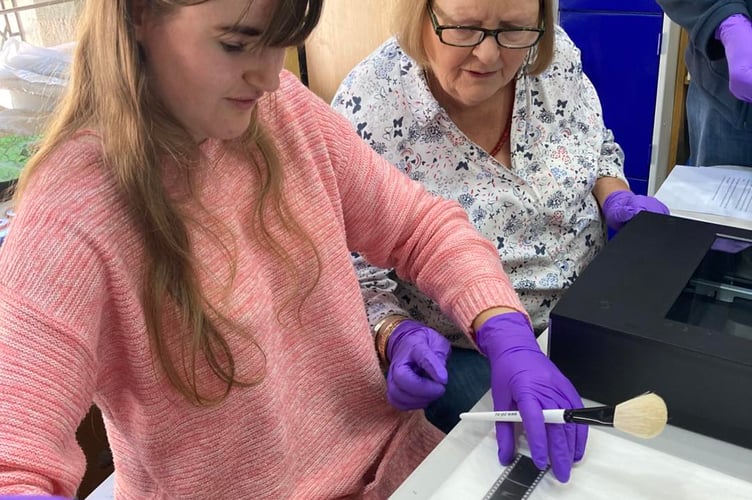
At the heart of the exhibition lies an extraordinary archive – around 500,000 photographic negatives taken by Rapson and donated to the museum in 2018. For years, the collection remained boxed up in unsuitable conditions at Liskeard Guildhall. Determined to preserve it, museum manager Iga Webb and volunteers launched a mission to secure its future and protect the fragile material from further deterioration.


A chance connection with media archivists at The Box in Plymouth led to a breakthrough. Volunteer Kevin Brown spent two months painstakingly repackaging the vast collection into archival-quality storage before it was transferred to Plymouth in July 2024. The move ensured the long-term preservation of the images while allowing the museum to retain access under an agreed retrieval process.
With the negatives safeguarded, attention turned to bringing them back to life. The Rapson Digitisation Project, launched in autumn 2025, has enabled volunteers to begin converting the archive into a digital format. Visitors can now explore a growing selection of images through an interactive kiosk in the gallery, offering a unique window into decades of local life.
But beyond the technical achievement, it is the deeply personal stories behind the photographs that are capturing hearts and reconnecting people with their past.
In one case, a woman was reunited with images from her wedding day nearly 50 years after they were taken. At the time, she and her partner could only afford two printed photographs. After Kevin identified her name while cataloguing negatives, the originals were recovered and reprinted – allowing the couple to finally see their full wedding album and relive the day in full.
A badly faded colour photograph was also restored to its original vibrancy after the team tracked down the negative, breathing new life into what had become an almost monochrome memory.
Alongside Rapson’s photography, the exhibition also features portraits of peace campaigners Leonard and Catherine Courtney and a specially curated tribute to humanitarian Emily Hobhouse, marking the centenary of her death through a striking installation.
Museum organisers say the reopening is just the beginning, with a programme of workshops, talks and events planned in the coming weeks as they continue to celebrate Rapson’s legacy and the community he documented so vividly.
Comments
We've recently changed our login process. If you have an account for commenting, you will need to re-register on the login window.
This article has no comments yet. Be the first to leave a comment.