

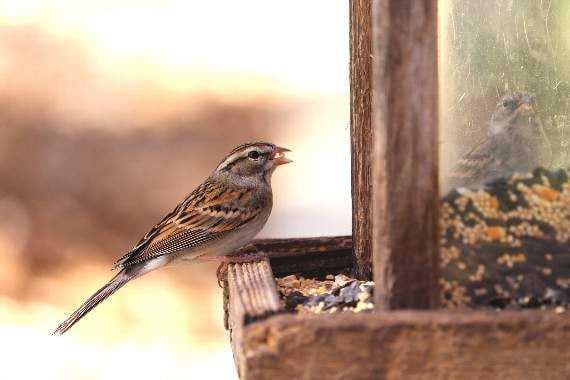
ALTHOUGH we are currently in lockdown and are staying at home, there is one activity you can take part in this weekend - and it will help our understanding of the country’s wildlife.
The RSPB is holding its annual Big Garden Birdwatch — so grab your binoculars and count the birds that visit your garden.
The Birdwatch is running this weekend until the end of Sunday (January 31), and all you need to do is spend an hour watching the birds from your home.
You need to count the birds you see in your garden or from your balcony. Ignore any birds that are still in flight. To avoid double-counting, just record the highest number of each bird species you see at any one time — not a running total.


You can submit your results online at rspb.org.uk/birdwatch from January 29 until February 19.
If you’d rather send your results by post, you can download a submission form from the RSPB website. Please post your results before February 15.
Every count is important so, if you don’t see anything, please still submit your result. Finding out which birds don’t visit your area is as important as understanding those which do!
Thanks to people like you taking part in the Big Garden Birdwatch, there are now over 40 years of data and this has helped increase the RSPB’s understanding of the challenges faced by wildlife.
It was one of the first surveys to identify the decline of song thrushes in gardens. This species was a firm fixture in the top 10 in 1979. But by 2019, those numbers had declined by 76% — coming in at number 20.
House sparrow sightings have dropped by 53% since the first Birdwatch in 1979? However, in the past 10 years their numbers have grown by 10% showing that we are beginning to see some signs of recovery.
Results like these help the RSPB spot problems, but, more importantly, they are the first step towards putting things right.