

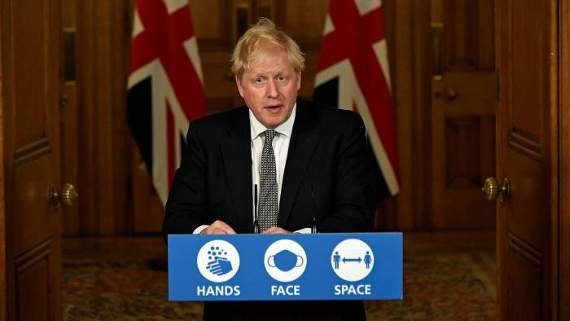
Last night’s Prime Minister’s press conference revealed that fears over pressures on the NHS in the face of an alarming spike in COVID-19 cases across England have forced Boris Johnson to change his stance and introduce a new month-long national lockdown now that the number of cases across the country since the pandemic began has reached one million.
The England-wide lockdown will begin on Thursday (November 5) and will continue until Wednesday, December 2, but unlike the lockdown in March and April schools, colleges and universities will remain open so that there is no further disruption to young people’s education.
In addition, the Government furlough scheme which helps firms to retain their employees by the Government paying 80 per cent of their normal salaries, and which had been due to end this weekend, will now be extended until December.
Non-essential shops and restaurants and bars will have to close, but supermarkets and takeaways will be allowed to stay open. Households will not be allowed to mix unless it is for reasons of childcare, and we will only be allowed to meet one other person from outside our households.
.jpg?width=209&height=140&crop=209:145,smart&quality=75)
At the televised press briefing, the Prime Minister said he was sorry to interrupt BBC viewers’ evening with more COVID news, but he wouldn’t be doing it unless absolutely necessary, namely that there had been a significant rise in the rate of infections.
He said Office of National Statistics (ONS) figures showed that the prevalence of the disease across the country had been going up rapidly in the last few weeks and there were now 50,000 new cases a day across England and rising.
Boris Johnson said that “no responsible Prime Minister can ignore these figures”, before going on to say that he had “passionately believed in the tiered system” of local lockdowns because of the impact of a more widespread lockdown on the economy, jobs and mental health of the public, and he wished to thank all the members of the public and local leaders who had “stepped up” to adopt measures to help stop the spread of the virus.
He went on: “But we have to be humble in the face of nature. Unless we act we could see the number of deaths reaching several thousand a day. Even in the South West, where numbers of cases are relatively low, NHS hospital capacity could be reached in a couple of weeks.”
He said that if the number of hospital COVID admissions got high, staff could be forced to choose between treating COVID and non-COVID patients – in other words, having to choose who might live or die. If this happened we might face the prospect of the NHS “not being there when we need it”. This was despite the extra capacity that had been provided by the new Nightingale Hospitals, the setting up of which he was extremely proud.
Mr Johnson then went on to spell out more details about the new restrictions: from Thursday until the start of December, members of the public must stay at home and only leave to go to school, to work if they are unable to work from home, to obtain medical supplies, or to buy food and other essentials. Non-essential shops and entertainment venues must close but takeaways can stay open.
Workplaces should stay open if employees are unable to work from home, and if you are over 60 you are especially vulnerable to the virus so you should take extra precautions, but this time the authorities will not be enforcing the same degree of shielding as back in the spring.
The Prime Minister said he realised that there would be a big impact on businesses, and he was “truly sorry”, but for that reason he was extending the furlough scheme until December. He said that the new lockdown would last from Thursday, November 5, to Wedensday, December 2, and after that there would be a return to the tiered system of local measures.
He added that Christmas was likely to be very different for us all this year, but it was his “sincere belief that by taking action now will ensure families can be together then”.
He added that during the month-long lockdown childcare facilities, schools and universities would stay open as “school is the best place for children to be” and he urged parents to continue taking their children to school throughout the lockdown period.
In addition, unless specifically directed otherwise, patients should continue to use NHS services and collect prescriptions, etc.
Mr Johnson went on to say that he would be updating Parliament on the new measures on Monday and then a Parliamentary vote on the measures would take place in the House on Wednesday. He added that “our friends in France and Belgium” were currently taking similar measures due to spikes in virus case numbers.
He ended the main part of the press briefing by saying that he was “optimistic” that new medications and quicker methods of testing that produced results in 10-15 minutes would, as they were rolled out more widely, help to reduce the spread of the virus going forward.