


.jpg?width=209&height=140&crop=209:145,smart&quality=75)

The COVID-19 Genomics UK Consortium - comprised of the NHS, Public Health Agencies, Wellcome Sanger Institute, and numerous academic institutions - will deliver large-scale, rapid sequencing of the cause of the disease and share intelligence with hospitals, regional NHS centres and the Government.
It aims to provide breakthroughs that help the UK respond to this and future pandemics and the information will be key for stopping the virus spreading by informing the best strategies for reducing spread and for future diagnostic tests and treatment.
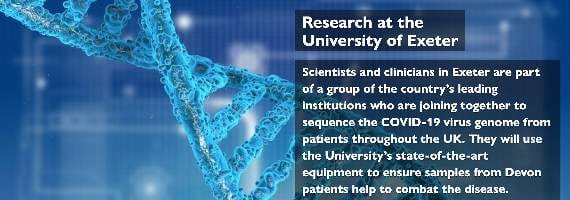
Samples from patients with confirmed cases of COVID-19 will be sent to a network of centres including Exeter which will liaise with the Wellcome Sanger Institute, one of the world’s most advanced centres of genomes and data, to analyse the genetic code of COVID-19 samples circulating in the UK.
Ray Sheridan, the RD&E consultant looking after many Covid-19 patients, said: ’As a frontline clinician, this research effort gives me hope that I can pass on to patients. Every day that we can delay this virus from hitting its peak - by handwashing, isolation and social distancing - buys us more time to work on this crucial research.’
Dr Stephen Michell, Senior Lecturer in Molecular Microbiology at the University of Exeter, said: ’The University has invested more than £3 million pounds in state-of-the-art DNA sequencing supported by the Wellcome trust. This core facility is ideally placed to provide support from the South West towards this crucial national research consortium into Covid-19. This collaboration will aid in the advancement of therapies and diagnostics.’