
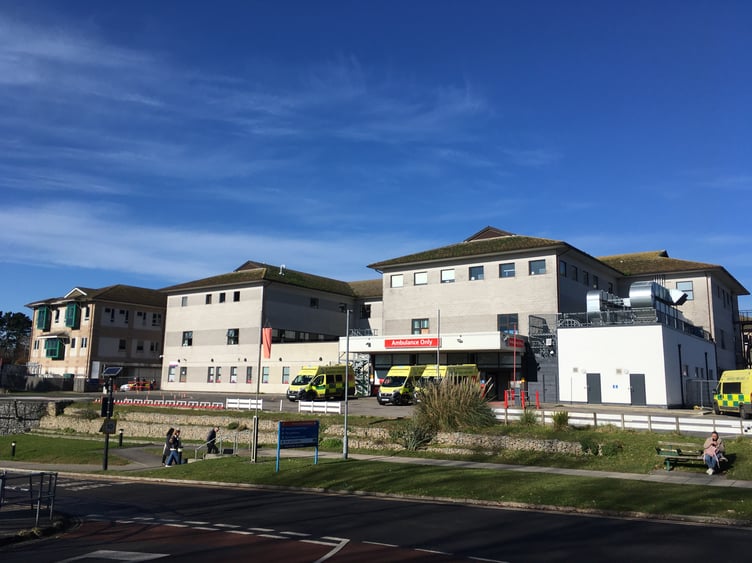
A CORONER in Cornwall has sent a damning prevention of future deaths report to the government following the death of a 91-year-old man at the Royal Cornwall Hospital at Treliske, Truro.
Guy Davies, assistant coroner for Cornwall and the Isles of Scilly, raised serious concerns about significant handover delays at the hospital following a total ambulance delay of 13 hours in transferring Geoffrey Fuller to the emergency department (ED).
Mr Fuller called an ambulance due to a dislocated hip. Mr Davies noted that the 13-hour delay meant Mr Fuller had to endure unnecessary pain and suffering. During his subsequent admission on July 8 last year, Mr Fuller died of a ruptured aneurysm, which was unrelated to the dislocated hip.
Mr Davies found that the ambulance delay “did not more than minimally contribute to the ruptured aneurysm”.
The NHS national target is for ambulances to hand over patients to hospital within 15 minutes of arrival. The delay in ambulance response was 10 hours and 12 minutes, during which time Mr Fuller was in pain and unable to move. On arrival at Treliske, Mr Fuller spent a further two hours and 52 minutes in the ambulance before being handed over to the emergency department.
Mr Davies also raised concerns with the Department of Health and Social Care about “insufficient social care provision leading to large numbers of patients in hospital who are otherwise fit for discharge, thereby impeding patient flow through hospital”.
The assistant coroner also highlighted ED crowding leading to “increased risk in mortality for patients being held in ambulances and corridors, and being delayed from receiving surgery or specialist treatment on wards”.
In his report to prevent future deaths, Mr Davies noted that recent data indicated the picture had not improved since Mr Fuller’s death. Significant average handover delays at the Royal Cornwall Hospital (RCH) were recorded for every month of 2026 to date, beyond the 15 minutes target.
The day before Mr Fuller’s inquest – June 7, 2026 – South Western Ambulance Service NHS Foundation Trust (SWASFT) recorded average handover delays at RCH of one hour and 10 minutes.
Mr Davies wrote: “The court heard evidence of a new policy being implemented by SWASFT to try and reduce ambulance resources being tied down in lengthy waits at hospital. After a 90-minute handover delay, the ambulance paramedics will provide notice to ED that a patient is being left on a trolley in a corridor with fluids and medications if required so long as that patient is stable. This has led to significant crowding in RCH’s emergency department.”




He added that on the day of Mr Fuller’s ambulance delay, RCH ED was accommodating 105 patients – it has a capacity of 42 patients. ED accommodated the surplus patients on trolleys in corridors, seated within the waiting room or remaining inside ambulances in the parking area outside ED. “The situation had not improved as at the date of this inquest,” noted Mr Davies.
His report states that the coroner’s court found there was insufficient bed availability on acute wards which was attributable to significant numbers of patients in hospital with no reason to reside (NCTR) – patients who cannot be discharged due to lack of onward care support.
On the day of Mr Fuller’s ambulance delay, almost 20 per cent of patients in RCH were recorded as NCTR.
Mr Davies also sent his report to Mr Fuller’s family, the Chief Coroner for England and Wales, Royal Cornwall Hospitals Trust (RCHT) and SWASFT.
The Minister of State for Public Health and Patient Safety, Dame Diana Johnson, responded to Mr Davies’ concerns in a letter dated August 17.
The letter states: “Firstly, I would like to say how saddened I was to read of the circumstances of Geoffrey Fuller’s death and I offer my sincere condolences to his family and loved ones. The circumstances your report describes are concerning and I am grateful to you for bringing these matters to my attention.
“The report raises concerns over insufficient social care provision leading to large numbers of patients at Royal Cornwall Hospital Trust who are otherwise fit for discharge, thereby impeding patient flow through hospital. This is linked to greater crowding in emergency departments, and longer ambulance handover delays, and in turn to increased mortality risks for those patients held in corridors and in ambulances being delayed from receiving surgery or specialist treatment on wards.
“The Government recognises and shares your concerns regarding the impact that delays in accessing appropriate social care and community support can have on patient outcomes.”
The minister outlines ways in which the Government is aiming to improve the situation.
“Government continues to support local systems to improve integration between health and social care through the Better Care Fund (BCF). For 2026/27, over £9 billion is committed through the BCF, with integrated care boards and local authorities required to jointly plan and deliver services that help people maintain or regain their independence, prevent avoidable admissions, and support timely and effective discharge from hospital.
“Recent reforms to the BCF place greater emphasis on rehabilitation, reablement and other recovery-focused services, reflecting the importance of coordinated support in reducing delays and improving patient outcomes.”
She also mentions the Government’s vision for a National Care Service, which “is about building a social care system that gives people greater choice, control, dignity and independence. The Prime Minister has made clear that he wants to see rapid progress on this, working in partnership with the adult social care sector.
“The Government is driving progress on the recommendations that Baroness Casey’s independent commission into adult social care made earlier this year for immediate action on dementia, motor neurone disease and adult safeguarding. The Government has also brought forward the date for Baroness Casey’s commission to make recommendations on the future of adult social care and how to deliver the National Care Service; the Commission will now report by summer 2027 rather than by 2028.”
In a joint statement, the Royal Cornwall Hospitals NHS Trust and South Western Ambulance Service NHS Foundation Trust said: “We are very sorry for the delay in Mr Fuller’s care and would again like to offer our sincere condolences to his family and friends.
“Whilst the coroner has acknowledged the delay was not directly related to his death; it is not the experience we would want for any of our patients.
“Together, GP services, hospitals, community-based care and the voluntary sector are all working hard to prevent delays and improve response times, with our focus on care close to home and avoiding admission to hospital wherever appropriate.”
Comments
We've recently changed our login process. If you have an account for commenting, you will need to re-register on the login window.
This article has no comments yet. Be the first to leave a comment.