

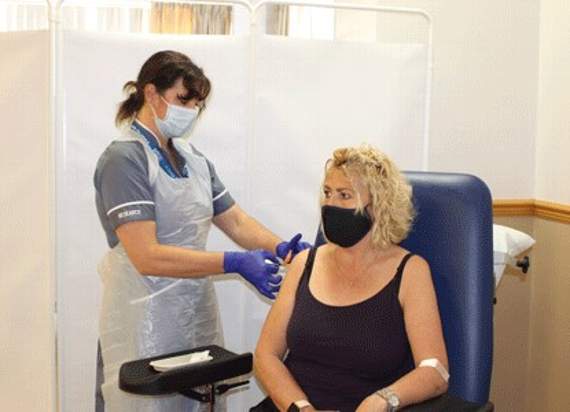
Volunteers in Plymouth are taking part in a study using an Oxford/AstraZeneca variant vaccine, aimed at preventing the Beta COVID-19 variant.
The University of Oxford in partnership with AstraZeneca are leading the Phase II/III study, supported by the National Institute for Health Research (NIHR), which will assess the safety and immunogenicity of the variant vaccine in both previously vaccinated and unvaccinated adults.
The study recently opened at Derriford Hospital and is being run by University Hospitals Plymouth (UHP) NHS Trust, with 77 participants having successfully been recruited.
Overall, the study plans to recruit approximately 1,865 participants across the UK, South Africa, Brazil and Poland, including 800 participants across 14 NIHR sites.

.jpg?width=209&height=140&crop=209:145,smart&quality=75)


The new variant vaccine, known as AZD2816 has been designed using the same adenoviral vector platform developed by researchers at the University of Oxford using the ChAdOx platform technology, with ten minor genetic alterations to the spike protein based on the Beta (B.1.351, South African) variant.
The variant vaccine will be administered to those previously fully vaccinated with two doses of original Oxford/AstraZeneca or an mRNA vaccine (Pfizer and Moderna), at least three months after their last injection.
AZD2816 will be given as two doses, in non-vaccinated individuals four or twelve weeks apart, or given as a second dose following a first dose of Vaxzevria four weeks apart.
Professor Sir Andrew J Pollard, Chief Investigator and Director of the Oxford Vaccine Group at the University of Oxford, said: “Testing booster doses of existing vaccines and new variant vaccines is important to ensure we are best prepared to stay ahead of the pandemic coronavirus, should their use be needed.”