
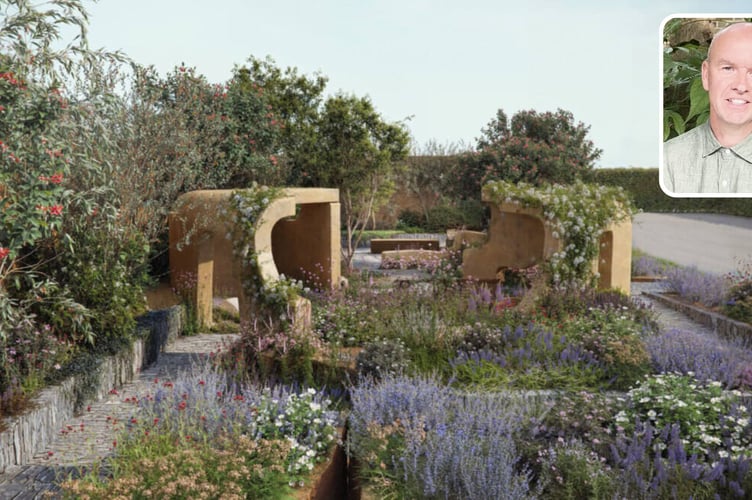
A CORNISH garden designer is preparing to take a powerful message from Fowey to the world stage this spring, as a striking new installation at the RHS Chelsea Flower Show aims to break the silence around gynaecological cancers and save lives through conversation.
Darren Hawkes, who runs his design studio from the Windmill Industrial Estate in Fowey, has created the Lady Garden Foundation’s “Silent No More” Garden – a bold, immersive space designed to challenge stigma, spark dialogue and encourage earlier diagnosis of women’s cancers.
The garden will be on display at RHS Chelsea Flower Show from May 18 to 23, positioned on the prestigious Main Avenue, placing its message at the very heart of one of the world’s most famous horticultural events.
Backed by the Lady Garden Foundation, the installation will be supported throughout the week by celebrity ambassadors including Trinny Woodall, Vernon Kay and Davina McCall. Each will take turns as host ambassadors, helping to engage visitors and bring national attention to the campaign.




Their role is to open up conversations about women’s gynaecological health and encourage the public to talk more openly about symptoms and prevention. The campaign highlights five cancers – vulval, ovarian, cervical, womb and vaginal – which together claim the lives of around 21 women every day in the UK.
The charity says low awareness and long-standing embarrassment around these conditions continue to delay diagnosis, often with devastating consequences.
For Davina, the cause is deeply personal. She said: “My mother had ovarian cancer, and in those days, no one talked about women’s gynaecological cancers. There was a real sense of shame and embarrassment. It’s incredibly important we start having open conversations about the symptoms and what they can feel like.”
At the centre of the Chelsea installation is Darren’s carefully developed design, created over two years in collaboration with clinicians from The Royal Marsden Hospital and patients who have experienced delayed or missed diagnoses.
He himself said the garden is designed to confront discomfort head-on.
“Silence and embarrassment delays diagnosis and costs lives,” he said. “The first step in bringing about change is making space for conversation. The garden will provoke discussion, having a positive effect on outcomes for women, and in turn these effects will be welcomed by families, partners and loved ones.”
The design uses abstract sculptural forms inspired by the female anatomy and the work of Spanish artist Eduardo Chillida. Visitors will move through a series of carefully shaped spaces, beginning in more enclosed, intimate areas before gradually entering more open surroundings.
This journey is intended to represent the emotional shift from private uncertainty to shared understanding and open dialogue.
Five sculptural elements within the garden represent each of the cancers, while planting, water and pathways guide visitors through the experience and reinforce themes of movement, transition and awareness.
Lady Garden Foundation co-founder and CEO Jenny Halpern Prince said: “We hope we can increase awareness and inspire women to take proactive steps for their health that will change the dial on gynaecological cancer in the future.”
Comments
This article has no comments yet. Be the first to leave a comment.