
AN EXHIBITION is bringing to light Polperro’s place as one of Europe’s foremost centres for art in the 19th and 20th Centuries.
Most would associate St Ives or Newlyn as the places in Cornwall where artists settled, drawn by the spectacular coastline and rugged inland landscape, the ever-changing sea and the light conditions.
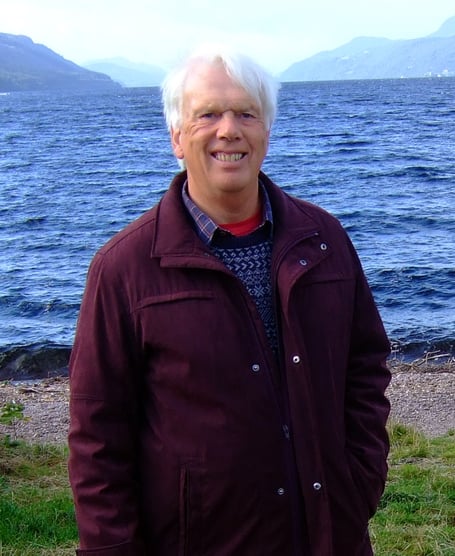
But Polperro too became an important artistic community in its own right, says art historian David Tovey.
David has devoted the last few years to researching artists of the past 200 years with a connection to the village, and has published a two-volume series of books on the subject.
 More than 10,000 ultra low emission vehicles registered in Cornwall – as campaigners group call for more equal access across UK
 Festive rescue as coastguard called to Whitsand Bay
 Cornwall road closures: more than a dozen for motorists to avoid over the next fortnight
 Cornwall's Voice: Anna Gelderd, Labour MP for South East Cornwall
“Polperro’s isolated position on the south coast of Cornwall between Looe and Fowey, and the lack of any nearby rail link until 1901, meant that few artists, other than West Country residents, visited before 1880,” says David.
“However, the popularity of an 1880s romantic novel about Polperro’s smuggling past – Adam and Eve by Louisa Parr – which highlighted its scenic attractions, resulted in more artist visitors that decade. The result was that paintings of Polperro started to be hung with some regularity at the Royal Academy.
“Those artists included William Llewellyn (later president of the Royal Academy) and William Mouat Loudan (who became head of Westminster School of Art), but the most regular visitors were Charles Boutwood and Herbert Butler. The two first visited in 1884, but returned to court two daughters of their landlord, Captain John Pond, eventually marrying them in 1889 and 1892 respectively.
Butler and his wife Sophie settled in Polperro in 1900. He is considered the father of Polperro art, remaining a key figure in the community until his death in 1931. He produced oil paintings of the fisherfolk and watercolours of Polperro’s harbours and little streets and opened a painting school in 1907. In particular, he highlighted Polperro’s attractions as a place for twilight, moonlit and night scenes.”
Polperro became a destination for students on the international art circuit and a popular location for painters from Europe and the United States. Among these was Hendrik Jan Wolter, one of the few Dutch artists to embrace Impressionism, who visited regularly from 1909–32.
“Wolter’s Cornish works are considered among his best, and a painting of Polperro is on the front cover of his biography,” said David.
“From even further afield came the New Zealander Herbert Babbage, and Teng-Hiok Chiu, the Chinese painter who famously won the Turner Gold Medal in 1929.”
Polperro came into its heydey of art in the post WW2 period and became a fully-fledged artists’ colony just as the fishing industry was coming to its end in the 1950s. Principal figures of the time were Jack Merriott, who was successful as a poster artist and art teacher (known as ‘the Wizard of Watercolour’); Stuart Armfield, a master of still-life painting in egg tempera; Tom Morton, whose mental problems sadly garnered more headlines than his distinctive art; Frederick Cook, best known for his decorative depictions in gouache of Polperro’s harbours; and Anyon Cook, his wife, a portraitist whose subjects included a six-year-old Princess Anne.
David Tovey has written a series of books documenting Polperro’s place in the art world: Polperro – Cornwall’s Forgotten Art Centre, Volume One – Pre-1920 and Volume Two – Post-1920. These can be obtained via https://www.stivesartinfo
The exhibition Polperro – Cornwall’s Lost Art Centre – will run at the Methodist Chapel, Fore Street, Polperro until May 5.
Comments
This article has no comments yet. Be the first to leave a comment.