

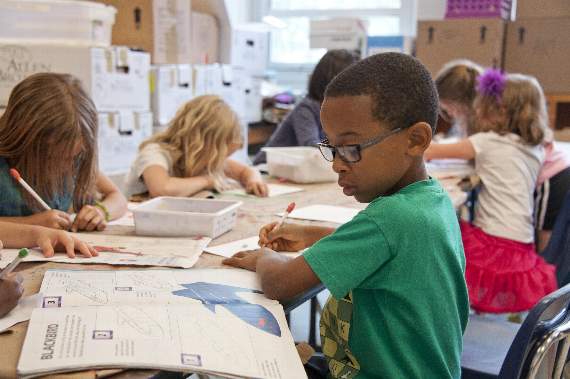
DETAILED guidance to help schools, colleges and nurseries prepare for a return of all children and young people to full-time education has been published by the Government today.
It follows the announcement that all schools will be expected to open at their full capacity from September, with current restrictions on group sizes lifted.
Mandatory attendance at school will be reintroduced, and for older students, exams will be taken at the usual time in summer 2021, says the Government, with Ofqual to look at what measures will need to be taken to make up for the lost learning time and the impact this could have on exam results.
The Department for Educations says that Covid-19 secure measures will remain in place to reduce the risk of transmission, with schools being asked to keep children in class or year group sized ‘bubbles’ and to encourage older children to keep their distance from each other and staff where possible. This is alongside protective measures such as regular cleaning and handwashing.

’Where there is a positive case in a school or college,’ said a Government spokesperson, ’the Public Health England local health protection team will advise on the appropriate action, which could include small groups of young people and staff being asked to self-isolate for up to 14 days.
’Where there are two or more confirmed cases in a two-week period, health protection teams may ask a larger number of other children or young people to self-isolate at home as a precautionary measure.
’Where an outbreak in a school is confirmed, for specific detailed investigations a mobile testing unit may be dispatched to test others who may have been in contact with the person who has tested positive. Testing will first focus on the person’s class, followed by their year group, then the whole school if necessary.’
For nurseries, childminders, and other early years providers, restrictions on group sizes will be lifted from 20 July, increasing capacity from the start of the summer holiday.
Education Secretary Gavin Williamson said: ’I know these past three months have been some of the most challenging that schools have faced. What they have achieved to make sure that young people are kept safe and can continue to learn during this period is remarkable, and I am incredibly grateful for that.
’Nothing can replace being in the classroom, so we have been working hard to ensure they can reopen as soon as possible. We have already seen more than 1.5 million children and young people return, but we must make sure all pupils can go back to school in September, giving them the opportunity to thrive and fulfill their potential.’
Deputy Chief Medical Officer, Dr. Jenny Harries, said: ’A child’s education is essential to their healthy development - we know that missing too much school can have a negative impact on children’s mental and physical wellbeing.
’Everybody wants children to be safe and thankfully as we have learned more about COVID-19, the evidence has shown that the risk of severe disease in children is low. However, although the number of COVID-19 cases has declined, it is still in general circulation - so it important we ensure schools implement sensible precaution to reduce potential transmission of COVID-19 and minimise any risk to teachers and their pupils.’