

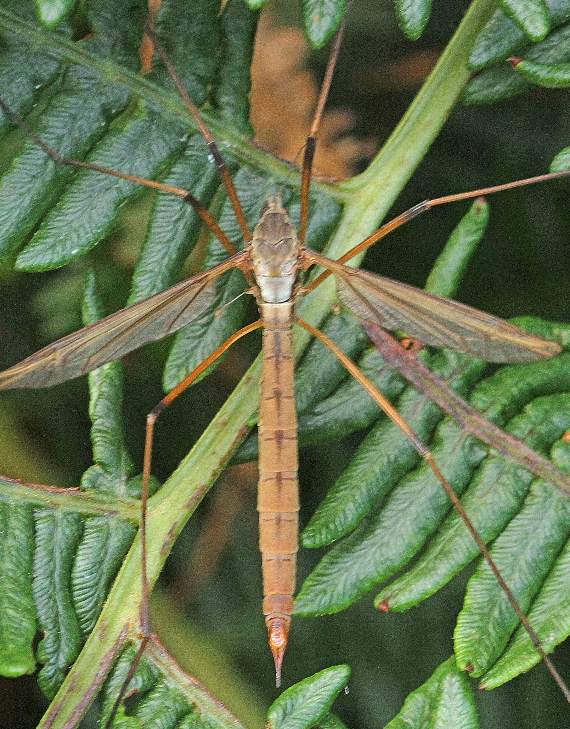
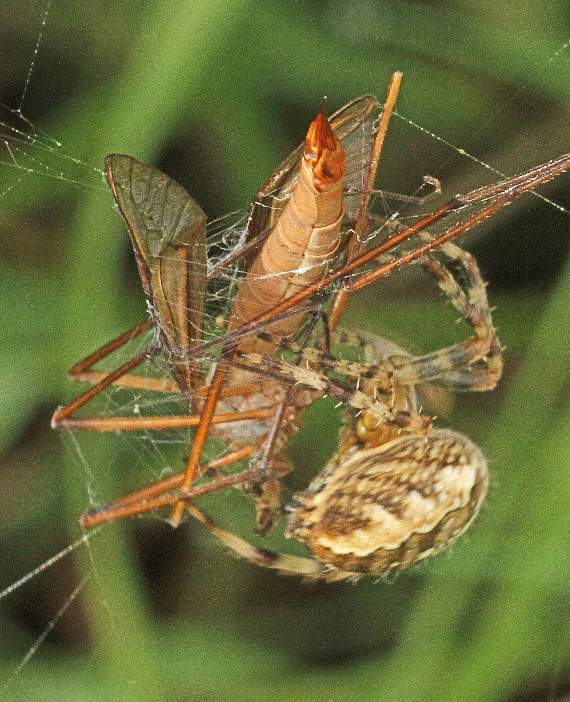
As usual when I walk the lanes, I have my eyes on the hedgerow at all times as all the vegetation now harbours lots of beetles, bugs and several species of flies. Last week I spotted a giant cranefly on the hedge where it had pitched on some leaves. After taking its photograph I walked on and came across a garden spider’s web with the large insect stretched out in the centre. Another picture I thought, but just as I was framing it up and getting it into focus the whole web began shaking and the spider moves quickly to the left where the very same giant cranefly that I photographed a few minutes before, had flown into the web.




Immediately the spider began to wrap the unfortunate fly up using a long strand of silk leaving the captive to become dinner for its attacker. The thing was, the spider was probably just half the size of the cranefly but it won its large meal.
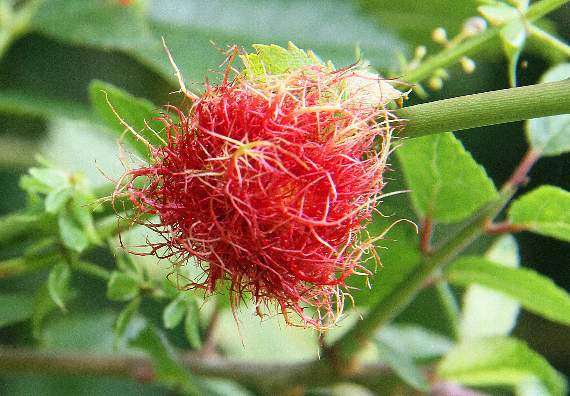
I noticed several Robin’s pincushions decorating the hedges where they grow on the trailing stems of wild roses. These round, fibrous growths that must be the most decorative gall that we see in the UK, start off green, then become red and finally turning brown. The pincushions are caused by tiny black and red gall wasps – Diplolepis rosae – laying their eggs in the undeveloped leaf bud, thus causing the rose to produce these beautiful galls containing the growing larvae.
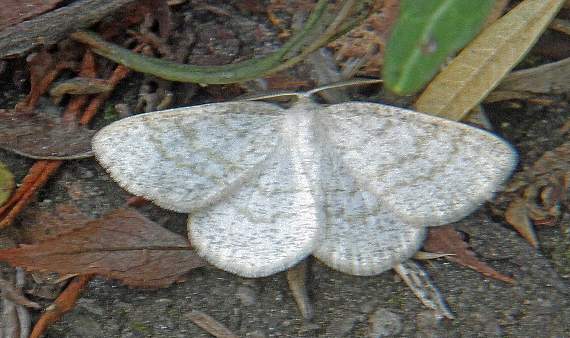
Occasionally whilst out walking I spot something white among the vegetation which usually turns out to be a small feather from a bird but a few days ago I was surprised to see a small white moth resting. Barely an inch, about 12mm wingspan, I identified it as a small white wave moth and at this time of the year this moth was probably one of a second brood, the first would be in May or June. Usually they fly towards the end of the day but if disturbed, sometimes by a photographer, they readily take to the wing.
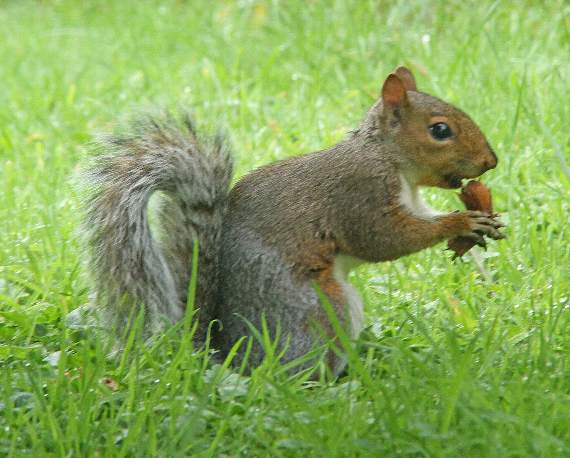
There is a short length of road near Trehunsey Crossroads where several hazel trees line the hedge. This is where I often pick up the first nuts of the year, but on this occasion, there were none. However I did pass a field gateway where there was another hazel tree and there, just inside the gate, was a squirrel with a nut in its paws. I usually pick up these nuts from the road and those I don’t eat I carry home to throw onto the lawn where a pair of these long, bushy tailed animals collect them, as we watch of course.
I came across some fresh flowers of the Umbelliferae family which I first thought must be upright hedge parsley – Torilis japonica – with plain white blooms instead of the sometimes pink. This plant flowers from June to September but, on closer examination I decided that it was a late flowering cow parsley – Anthriscus sylvestris – that blooms earlier in the year with its lower petal always larger than the other four. Its leaves sometimes appear around Christmas time.