

MORE council staff in Cornwall are to be given police powers in a big to tackle some anti-social crimes.
The Community Safety Scheme (CSAS) has been running for some years - but looks set to be used more with Cornwall Council introducing Public Space Protection Orders which can result in dog owners being fined for failing to pick up dog mess, not keeping their dogs under control or on a lead in certain areas.
Three groups of staff employed by Cornwall Council have been given CSAS accreditation by Devon and Cornwall Police: three tri-service officers (who have a joint role with the three emergency services); five anti-social behaviour case workers and 13 members of the community and environmental enforcement team.
All have access to and share information and intelligence with Devon and Cornwall Police.



The tri-service officers can require names and addresses in situations including anti-social behaviour; confiscate alcohol in designated public places and from young people (from whom they can also confiscate tobacco); require the removal of abandoned vehicles; and carry out some traffic control duties.
The anti-social behaviour case workers can require names and addresses for anti-social behaviour and the enforcement officers can require names and addresses for an offence causing injury, alarm and distress to another person as well as for anti-social behaviour.
It is an offence not to comply with the requests of an accredited person.
A town council and four organisations who run events have also received CSAS accreditation for some of their staff.
St Ives Town Council has three staff who can require the name and address of a driver or pedestrian ignoring appropriate directions and who can control traffic; Bradsons Event Services has 15 staff who have these powers as well as having the power to stop cycles; whilst JPS Events Services has 65 staff who can control traffic.
Full details of all organisations who work across Devon and Cornwall can be found on the website. https://www.devon-cornwall.police.uk/advice/your-community/your-opportunities-to-help/community-safety-accreditation-scheme-csas/.
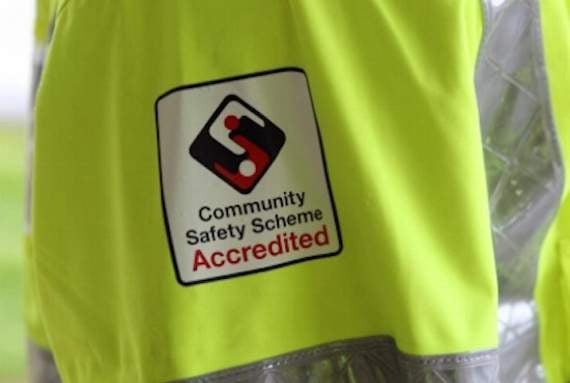
To use these powers accredited persons must be on duty in full uniform, display a CSAS patch on their uniform and possess a power card and police issued ID.
Partnership Superintendent for Cornwall Matt Longman said: ‘The scheme underpins our commitment to work in partnership with local organisations to provide a safer community and improve the quality of life in Devon and Cornwall, allowing these organisations to be recognised as part of the extended policing family.
‘They work in partnership with our neighbourhood policing teams.’
Becki Brodest-Nott, CSAS Manager for Devon and Cornwall Police, added: ‘There are a number of benefits of the scheme including reassurance to members of the community of the training and vetting completed by accredited persons.
‘It also allows better communication and improved relationships between the police and partner agencies to tackle anti-social behaviour and other low-level crime and disorder, which impacts significantly upon communities across Devon and Cornwall.
‘The accreditation of limited but targeted powers allows accredited persons to be more effective in the role they already undertake, but more importantly assists with ensuring safer communities for all to live, work and visit.’
Cornwall Council cabinet member for environment and public protection, Sue James, said: ‘Giving greater powers to tackle anti-social and nuisance behaviours to more staff within Cornwall Council and our town councils has to be good news for residents.
‘As residents see more people out in their communities with the power to act against dog fouling, under-age drinking and smoking and abandoned vehicles for example, I hope they will feel safer. I also hope that more town and even parish councils, might consider the benefits and want to get involved.’
Comments
This article has no comments yet. Be the first to leave a comment.