

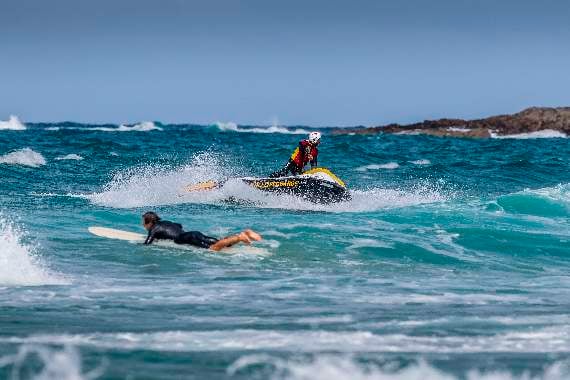
WHITSAND Bay lifeguards are urging the public to head for a lifeguarded beach and stay safe into the autumn.
Although the huge crowds have gone and the buzz of summer is over, the water is warm and many local people will continue to go to the coast for recreation.
RNLI lifeguards are reminding people to stay vigilant and head to a lifeguarded beach if they can.




Charlie Gillett, RNLI Lifeguard Supervisor in Whitsand Bay, said: “We have started the process of ending lifeguard patrols on certain beaches using staggered closures. These closures are decided on several factors including visitor numbers, incident statistics and local hazards.
“Many beaches across the region will continue a service over the next few months and up until the end of October. Just as we did throughout summer, we urge anyone planning on going in the water to always visit a lifeguarded beach and swim between the red and yellow flags.
“As we move into autumn, we tend to see an increase in swell, which means bigger more consistent surf conditions. Surfing is a great way to have fun, stay fit and enjoy the best of what the south west has to offer, but bigger waves increase the power of rip currents.”
Last week, RNLI lifeguards at Tregonhawke responded to five separate incidents at neighbouring beach Tregantle, including the rescue of a group of four young females who had got into difficulty in a rip current and were being pulled out of their depth.
“Tregantle now only has lifeguard cover on the weekends, so we urge people visiting during the week to come to neighbouring Tregonhawke, which is still operating a daily lifeguard service,” Charlie continued.
“Our lifeguards deal with rip currents on a daily basis and are always ready to respond if anyone gets in trouble in the water. That’s why it’s so important to choose a lifeguarded beach and enter the water between the flagged zones where the lifeguards can see you.
“Be vigilant and don’t push beyond your limits as that’s when you can get into trouble. Don’t go in the water alone and never enter the water if the lifeguards are flying the red flag, which means dangerous conditions.
“If you take appropriate caution and follow safety advice, this time of year can be some of the best with warmer sea temperatures, less crowds and lots of waves to enjoy.”
A rip is a strong current running out to sea, which can quickly drag people out to deeper water. Even the most experienced beachgoers can be caught out by rips. If you ever find yourself caught in a rip current remember the following safety advice:
• Don’t try to swim against it or you’ll get exhausted.
• If you can stand, wade don’t swim.
• Keep hold of your floatation device such as a bodyboard or surfboard.
• If you can, swim parallel to the shore until free of the rip and then head for shore.
• Always raise your hand and shout for help.
With record numbers visiting the region this summer the beaches have been busier than ever. The charity has recently launched the RNLI South West Lifeguard Appeal with the aim of raising the vital funds needed to train the lifeguards to carry out their lifesaving work.
To make a donation to the RNLI’s South West Lifeguard Appeal, please visit: https://www.justgiving.com/campaign/SW-Lifeguard-Appeal-2021