
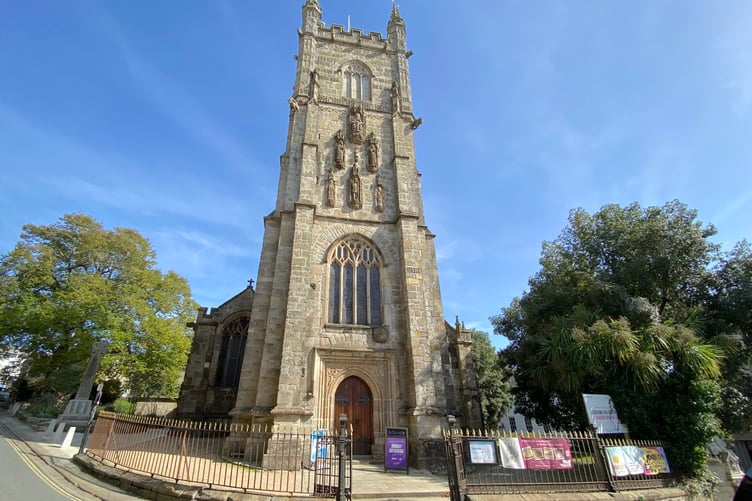
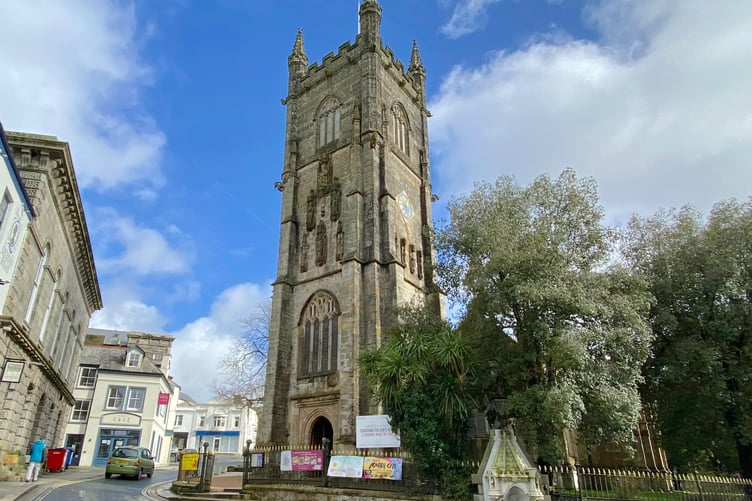
ONE of the finest collections of medieval statues in the country exists hidden in plain sight in the centre of a Cornish town.
The statues can be seen in the old market town of St Austell but are missed by many – because they are not at ground level.
The works from the Middle Ages are high up on the tower of the parish church, which is dedicated to the Holy Trinity.
Dr Mattingly believes Joseph May, a vicar who is remembered for serving the town of St Austell through a period of plague, hid the religious statues after the English Civil War in the mid-17th century at a time when Puritan zealots were in the habit of destroying such representations.
The historian says it is her belief that when Joseph May’s son became the vicar of St Austell some years later, he knew where the statues had been hidden and he had them restored to the tower when the danger of iconoclasm, the deliberate destruction, removal, or defacement of religious icons, sacred images, art or monuments, had passed.
Dr Mattingly shared her theory at a meeting of the St Austell Old Cornwall Society when she gave a talk on saints and Cornish churches.



A spokesperson for the society said: “Dr Mattingly began by reminding St Austell that it had one of the finest collections of mediaeval statues in the country on the exterior of the church tower, and that this was all the more remarkable because the statues had survived largely undamaged during the period of the Reformation and the English Civil War.”
Comments
We've recently changed our login process. If you have an account for commenting, you will need to re-register on the login window.
This article has no comments yet. Be the first to leave a comment.