

A plant to cover up bad smells...and a plant to soothe wounds are discovered in the hedgerow by photographer Ray Roberts this week.....
I went out to Clapper Bridge for a look around but it is no longer possible to park on the small piece of ground beside the river as it was fenced off with a heavy chain and barbed wire a few years ago, so no picnic spot anymore. In fact I think barbed wire beside the road is illegal, but that’s a problem for the St Mellion Parish Council to look into if they are at all concerned about safety in the parish.
The road leading to the bridge, on the Blunts side, is lined with lots of white flowers. Hogweed – Heracleum sphondylium – being the most prominent as well as being the tallest - some of the stems were a couple of metres high. Up to a few years ago this plant was gathered for pig fodder, in fact these animals loved it. The hollow stems were cut and used by school children as pea shooters but the juice tended to cause a rash on the lips as I can well remember.
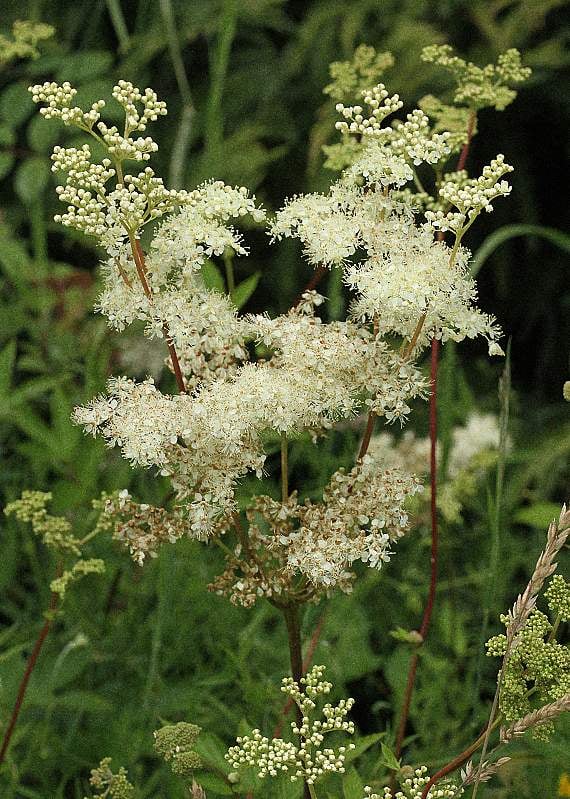
The beautifully perfumed meadowsweet – Filipendula ulmaria – was competing with hogweed for height but was only reaching 120cms. Its dense heads of flowers were once spread on floors to cover the smell of the 16th century homes, by ladies in Tudor times, just in case Queen Elizabeth dropped in for a cup of tea and a slice of caraway seed cake.




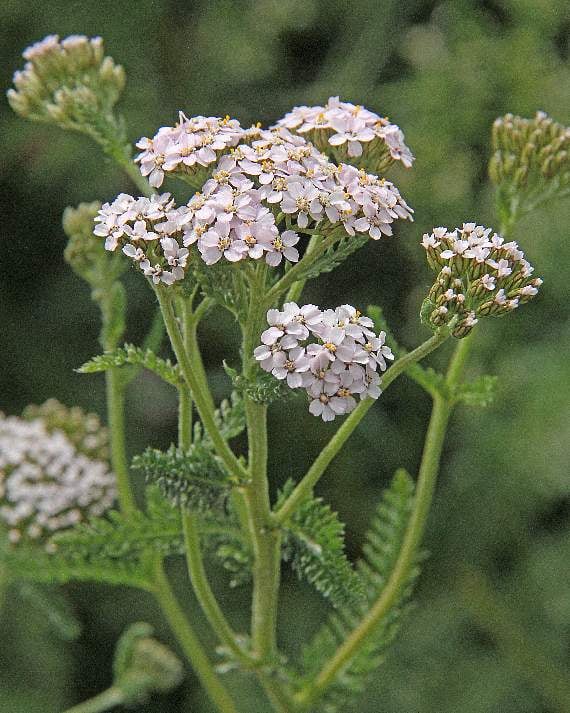
The white flowers of yarrow – Achillea millefolium – were also prominent on the roadside and it is said that the Greek warrior Achilles used its leaves to cure wounds made by iron weapons. This is why the plant was sometimes referred to as woundwort.
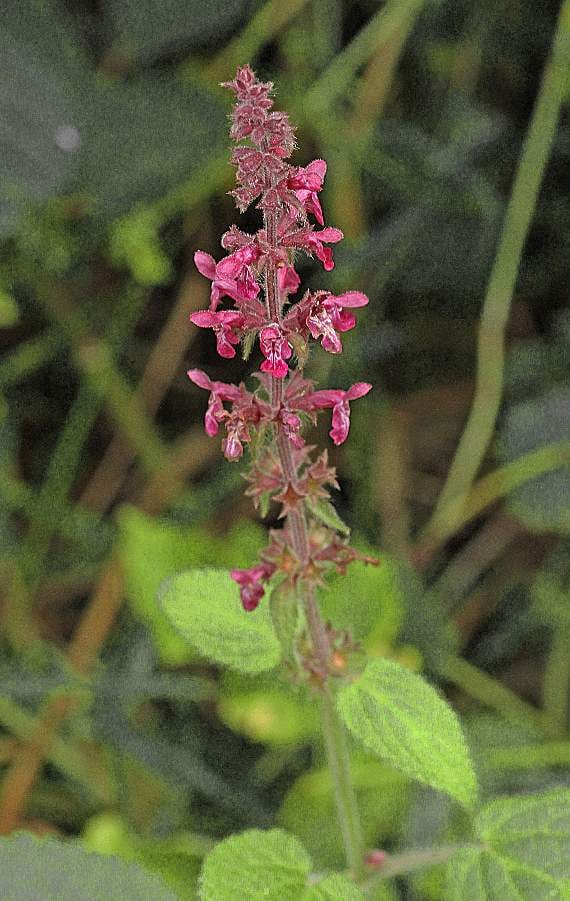
There was some hedge woundwort – Stachys sylvatica - with its small purple/mauve blooms growing among the white flowers, but as they do not grow much higher than half a metre they were hidden among the leaves of the taller plants. Their leaves were also used in years gone by to heal cuts and gashes on the arms and legs.
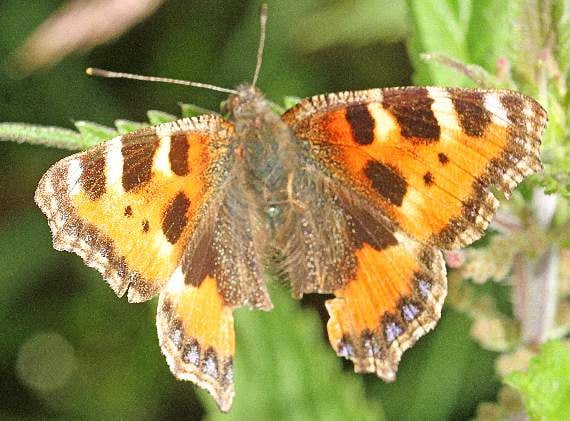
After a long chase I managed to get a picture of a rather ragged small tortoiseshell butterfly when it stopped for a rest. Its caterpillars live on common nettles and I could see over near the dwelling house, the verge on both sides of the road were covered with tall stinging nettles.
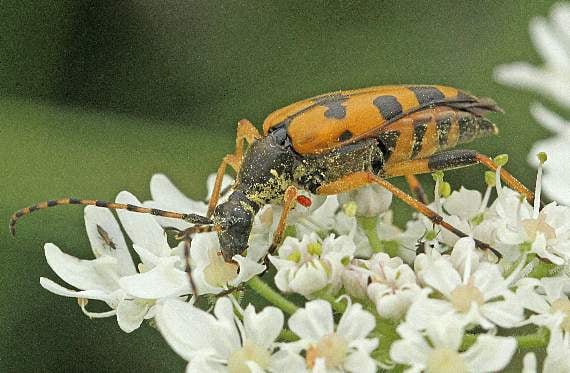
As usual I walked very slowly looking closely into the vegetation and I spotted a longhorn beetle crawling along a white flower with its body partially covered in pollen. This is a fairy common insect with antennae that are almost as long as its body.
Don’t forget when you are out for a walk there are lots of different insects on the vegetation and as they are not as big as butterflies, they are harder to spot. But keep looking.