
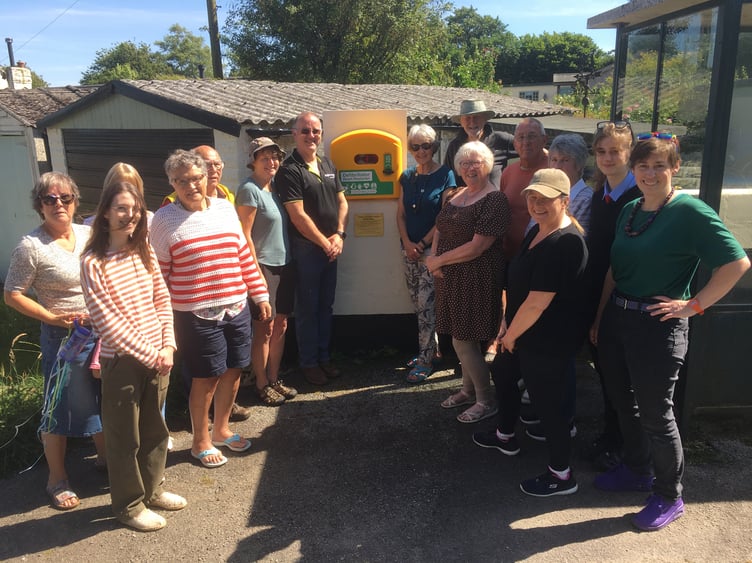
RESIDENTS in Higher Tremarcoombe have secured a new defibrillator for their hamlet after raising concerns about the time it could take to reach the nearest life-saving equipment.
The community group decided to seek its own automated external defibrillator (AED), with the closest existing machine located in Darite, around 800 metres away.
Residents said the distance could take 16 to 18 minutes to walk there and back, potentially exceeding the crucial “golden time” for effective defibrillator deployment during a cardiac arrest.
The group initially began raising money locally before being encouraged to apply for support from the British Heart Foundation. The application was successful, with the charity providing an AED along with funding for its upkeep, replacement pads and battery for 10 years.
The community was then tasked with finding a suitable location and arranging installation by a qualified electrician. Richard and Debbie provided the wall for the equipment, while KRP Electrics carried out the electrical installation as a service to the local community.
Residents also raised funds to provide free, hands-on first aid and defibrillator training. The group thanked Keith, Richard and Debbie, along with local benefactors, for helping cover the cost of the training.
The new AED adds to a network of defibrillators available across the surrounding area.
Other locations include the Sports Pavilion at Hockings House, Market Inn and St Cleer Primary School in St Cleer; the telephone box and Darite Primary School in Darite; Common Moor Village Hall; Inkies at Golitha Falls; and the Crows Nest pub.
Residents have been reminded defibrillators located at schools are only available during school hours.
The Higher Tremarcoombe group hopes the new equipment will provide greater reassurance for residents and improve access to potentially life-saving treatment in an emergency.


The initiative highlights the importance of communities taking action to improve emergency response times, particularly in rural areas where distance can make accessing lifesaving equipment more difficult.
Comments
This article has no comments yet. Be the first to leave a comment.