
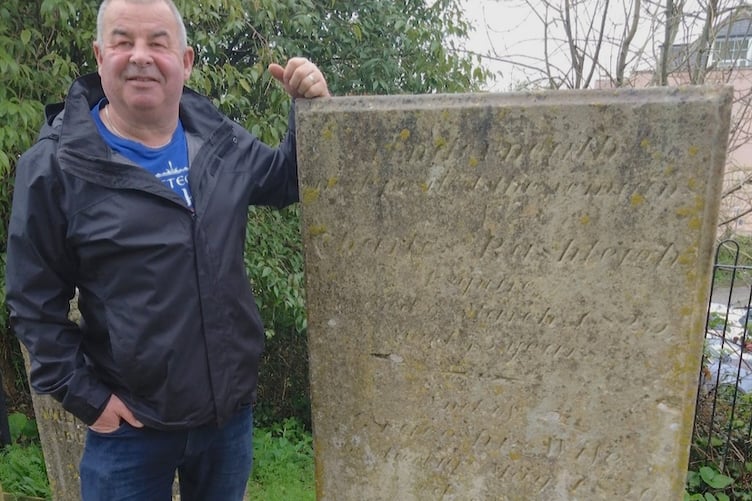
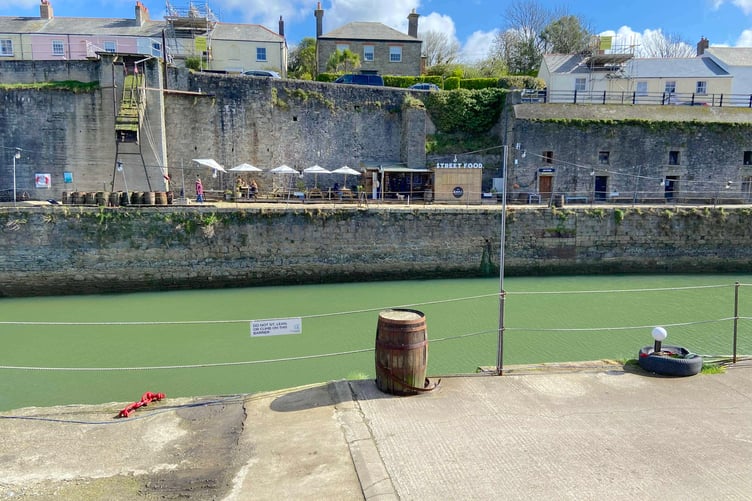
A LOCAL historian and author says the accepted story of the past of a heritage port in Cornwall, including tales of betrayal, is open to challenge following his latest detailed investigations.
Lyndon Allen has spent more than 700 hours looking into certain elements of the intriguing story of Charlestown, near St Austell.
The historian says his work is helping to peel back 250 years of myth surrounding the Cornwall mining world heritage site.
He said: “The story is no longer confined to the familiar narrative of a wealthy landowner creating a harbour and naming a town after himself, only to be systematically destroyed by the servants he had trusted.”
Lyndon’s research has particularly focused on Charles Rashleigh, a member of the gentry in the county, and on two men of humble origin, Joseph Dingle and Joseph Daniel.
Lyndon believes Joseph Dingle played a far more prominent role in the development of the harbour at Charlestown as mining prospered in parts of the St Austell district than has previously been stated and says that he was deeply financially entangled with Charles Rashleigh, way beyond the simple relationship of a master and servant.
And the historian also argues the story of Joseph Daniel is not as clear cut as people have been led to think.
Lyndon said: “Both men, according to the traditional account, ultimately betrayed Charles Rashleigh’s trust: Dingle accumulated an enormous debt which helped destroy Rashleigh financially, while Daniel was supposedly given Duporth Manor under a gentleman’s agreement so that he could qualify as a county magistrate, only to refuse to return the estate.


.jpg?width=209&height=140&crop=209:145,smart&quality=75)
“Rashleigh, having created Charlestown and advanced the fortunes of those around him, was, therefore, systematically ruined by the very men he had trusted. It is a powerful story, and one which has been repeated so often that its principal elements have gradually acquired the appearance of established fact. Yet the surviving documents I have examined present something considerably more difficult.
“Most importantly, the documentary Joseph Dingle increasingly refuses to fit the role assigned to him. Rather than appearing simply as Rashleigh's servant, he emerges as a man whose relationship with Rashleigh and Charlestown was considerably more substantial. This does not prove that the later stories are false, nor does it absolve Dingle of the enormous debts eventually claimed against him. It does, however, mean that the familiar explanation of Rashleigh's ruin cannot simply be accepted before the surviving evidence itself has been allowed to speak.”
Lyndon said of Joseph Daniel: “Daniel remains one of the great documentary paradoxes of the surviving Rashleigh papers. Later local histories constructed an extraordinary story around him, claiming that Rashleigh transferred Duporth to Daniel under a gentleman's agreement so that his servant could qualify as a county magistrate, after which Daniel supposedly refused to return the estate. Yet extensive searches have failed to identify Daniel as a magistrate, while his name has similarly failed to appear in the Duporth sale documentation examined.”
Lyndon said the Institute of Cornish Studies has described his latest research as groundbreaking.
Comments
This article has no comments yet. Be the first to leave a comment.