

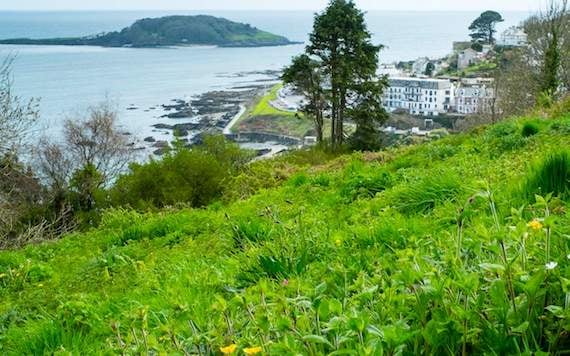
Bee glades are blooming, say managers of a wildlife project that has entered its second year this spring.
Patrick Saunders from the Kernow Ecology Long horned Bee Project has been working with East Looe Town Trust to protect the very rare long horned mining bee.
The bee has declined by 75% in Cornwall it is now only found on about seven sites, mainly because of the decline or lack of traditional flowery meadows.
East Looe Town Trust and Kernow Ecology have created two bee glades and one large meadow on the publicly accessible Wooldown.

And the meadows were a success in their first summer, with long horned bees regularly using the new areas.
The Lookout Meadow is developing to become a traditional hay-meadow, like those which were common in the countryside before the 1950s.
The meadow has lots of "hay rattle”,or yellow rattle, viewed as a good plant for wildflower meadows as it parasitizes vigorous grasses, giving better opportunity for wildflowers.
The bee glades have been created on steep slopes of the Wooldown which had been scrubbed over with bracken, bramble and the invasive old man’s beard.
After clearing these areas they were planted with the bee’s favourites: The long horn is a specialist which collects high protein wildflower pollen, particularly meadow vetches and wild everlasting peas.
Patrick Saunders said: ‘It has been surprising how much natural regeneration has emerged in the bee glades.
‘Speedwells, clovers, campion, toadflax, wild carrot and much more has come up after being swamped by coarser vegetation for years.
‘The bee glades will never look like a neat flower garden.
‘But we hope visitors will stop and enjoy the life it supports.
‘Locals and visitors have been enjoying improved views. On a sunny day you can see Devon’s only site for the long horned bee at Prawle Point.’
East Looe Town Trust vice chairman Brian Galipeau said: ‘The Trust puts a lot into maintaining the Wooldown and it makes good sense to improve it as a natural habitat.’
Comments
This article has no comments yet. Be the first to leave a comment.